
Bilona Ghee vs Regular Ghee — Nutrition, Taste & Uses

Choosing the right ghee for your kitchen, health and lifestyle can quickly get confusing with the many options that exist! Two of the most talked-about types are Bilona ghee and regular (commercial) ghee. Both are rich in fats and flavor and come from milk, but their preparation, nutritional composition, and uses are quite different.
This article will help you compare bilona ghee vs regular ghee in a number of factors including process, nutrition, taste and price so that you can decide what best suits your needs.
Quick Comparison Table
|
Feature |
Bilona Ghee |
Regular Ghee |
|---|---|---|
|
Process |
Curd-based, hand-churned traditional method |
Cream separation or butter-based industrial method |
|
Source |
A2 cow milk or buffalo milk, traditionally sourced |
Mixed milk sources, often standardized fat content |
|
Nutrition |
Rich in vitamins A, E, K2, butyrate, CLA (conjugated linoleic acid) |
Moderate levels of fats and fewer micronutrients |
|
Price |
Higher, premium product |
Lower, mass-produced |
|
Best Uses |
Sweets, Ayurveda, therapeutic uses, tadka, daily cooking, gifting |
Everyday cooking, frying, budget-friendly use |
How Each is Made
Bilona Ghee(Curd + Hand-Churn)
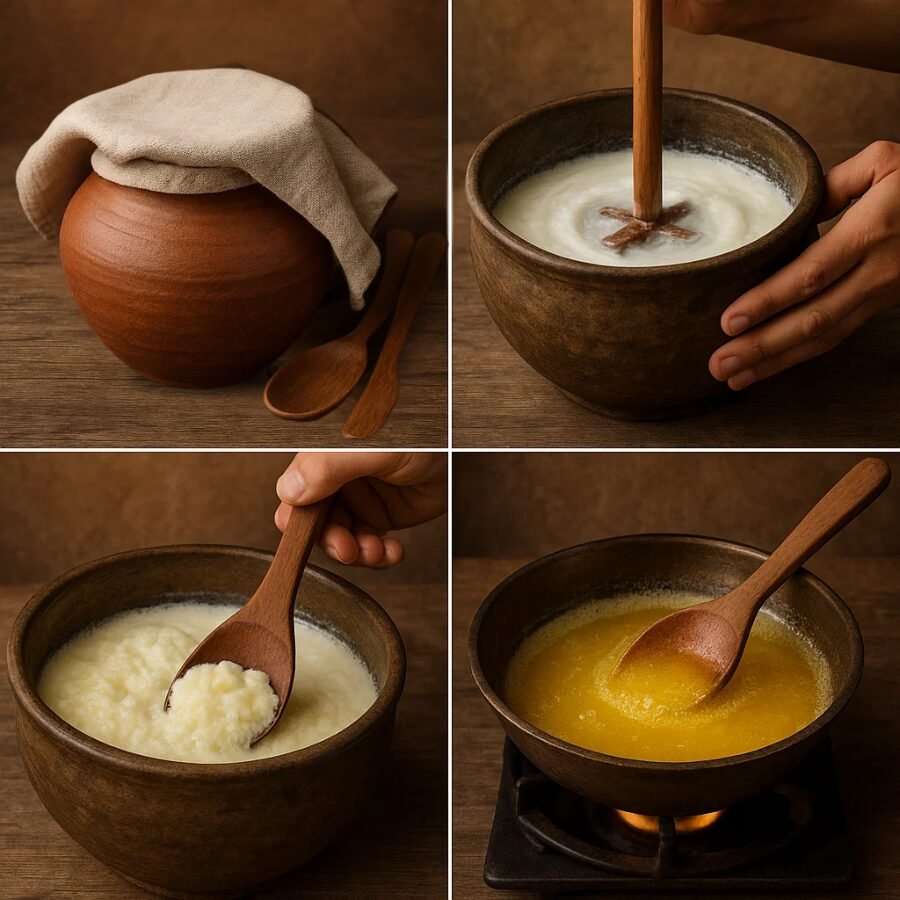
Bilona ghee is prepared using a centuries-old traditional process which is a labor intensive process. The bilona process involves setting sup of the curd with the pure milk, followed by hand-churning of curd using wooden churner to extract the butter then butter is slowly heated to get the pure golden ghee. This process preserves all the essential nutrients, especially when using A2 cow milk.
Commercial Ghee(Cream-Separated or Butter)

Regular ghee, often called commercial ghee, is produced by heating cream or butter. This process is faster and allow bulk production and may involve additives and preservatives. Commercial ghee can come from a variety of sources with the milk, and usually skips the fermentation, which can limit the depth of CLA and butyrate.
Nutritional Differences
Although both types of ghee are great sources of healthy fats, but the way they’re made changes how many nutrients they keep.
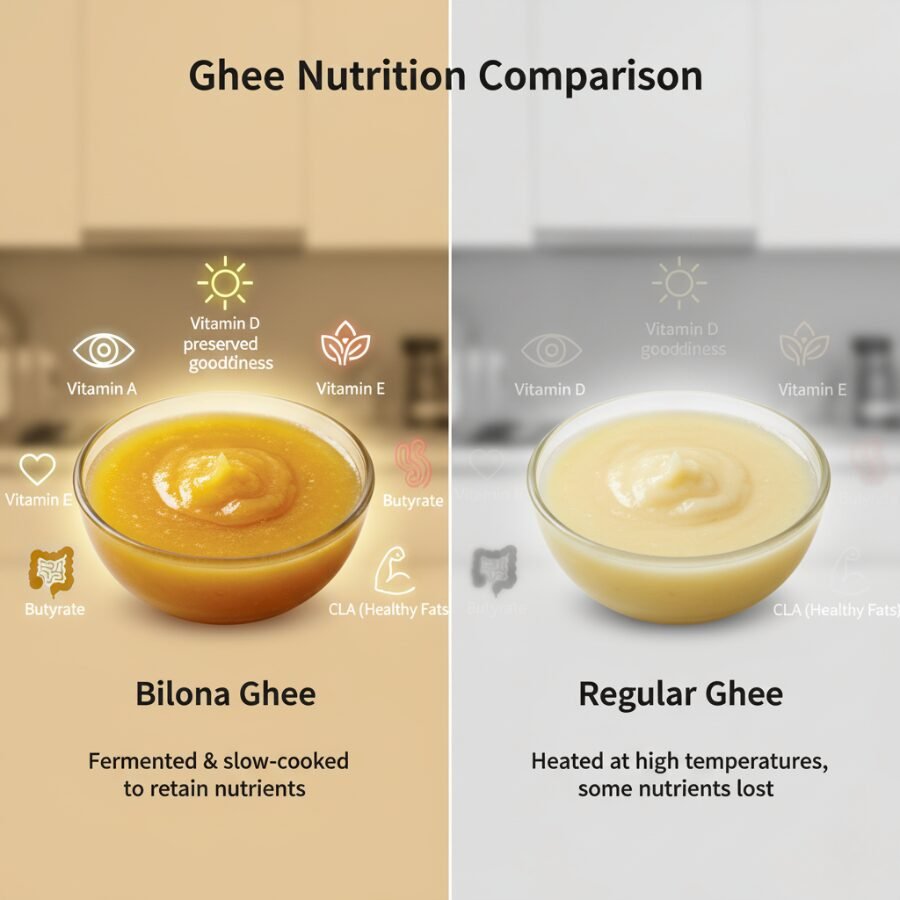
Bilona ghee is thought to have more vitamins like A, D, and E, and also more butyrate and CLA (healthy fatty acids). The fermentation (curdling) and slow heating help keep these nutrients.
Regular ghee also has healthy fats and vitamins, but cooking at higher temperatures degrades its nutrients and flavors.
Taste and Culinary Uses
The preparation process of ghee directly impacts its flavor and the dishes it’s matched with.

Bilona ghee has a nuttier flavor and richer buttery aroma with more grainy texture and deep golden color. Because of its slow cooking process it has more flavors, which is good for:
- Tadka (tempering): The final touch for dal or sabzi.
- Indian sweets: Ladoos, halwa and other mithai.
- Finishing dishes: Spreading it on rotis or rice for extra flavor.
Regular ghee is lighter in both taste and color. Commercial ghee has smooth texture and more neutral taste, hence it does not overpower your food.
Price & Value — Is the Premium Worth It?
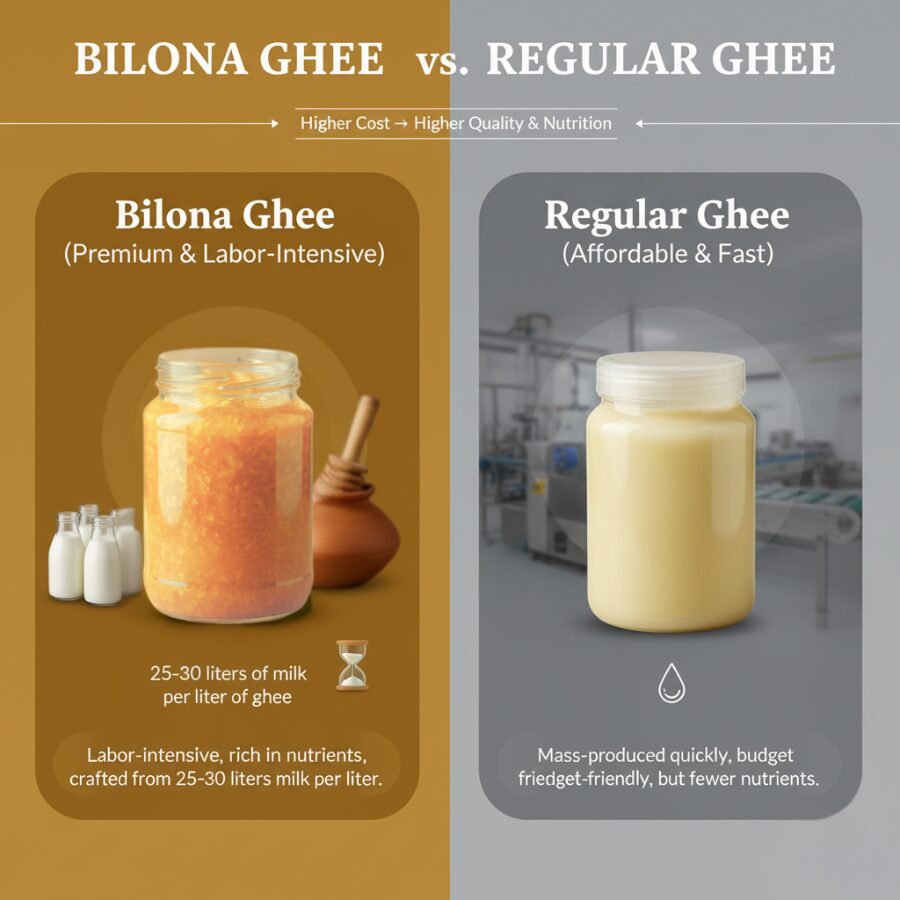
Bilona ghee is more expensive because Bilona ghee requires 25–30 liters of milk to produce a single liter! And, it takes more time and effort to make.
Regular ghee is made quickly, and broadly, in factories, which lowers cost. If you are wondering whether Bilona ghee is worth a bit more, consider what’s important to you—health, taste, or budget.
Want to know more about the bilona ghee before you buy?
Order a sample to experience the difference!
Who Should Prefer Which Ghee?
Consider what is more important to you:

Bilona Ghee is perfect if:
- You want the richest nutrition and real Indian flavor.
- You follow Ayurveda or want ghee for health benefits.
- You love preparing traditional sweets or dishes.
Regular Ghee is good if:
- You mainly need a simple cooking fat for everyday cooking.
- You frequently bake or prefer a milder flavor.
- You want a ghee that is affordable.
Verdict & Buying Tips
After exploring Bilona ghee vs regular ghee, Bilona ghee is a preferred for its authentic processing, flavor, potential health benefits, and particularly if you practice Ayurveda and looking for a traditional taste. If you want an affordable option for your daily cooking then regular ghee would be good fit for you.
Also Read:
- 10 Signs of Authentic Bilona Ghee (How to Spot Fake Bilona Ghee)
- Bilona Ghee Benefits – Nutrition, Ayurveda & Uses
Experience the unmatched flavor and purity of Bilona ghee—order now and elevate every meal!
Conclusion
Bilona ghee and regular ghee both have their unique benefits, and which type of ghee you will want to choose should depend on your beliefs and needs. Bilona ghee has the benefits of unique flavor, nutritional enhancements, as well as a heritage aspect due to its careful, slow preparation. Bilona ghee is great for those who seek authenticity, deeper flavor or follow Ayurvedic practice.
Regular ghee does great as many people’s practical, affordable go-to for cooking, baking, and frying on a regular basis.
Still confused which bilona ghee to buy? Take a quiz to discover the best pick for you.







 Easy DIY purity checks